
Give Your Lender a Better Option, Not a Discount Request
Shlomo Chopp joins Aviva Sonenreich on Commercial Real Estate Secrets to discuss CMBS distress, when to seek help, and offering your lender a better option.
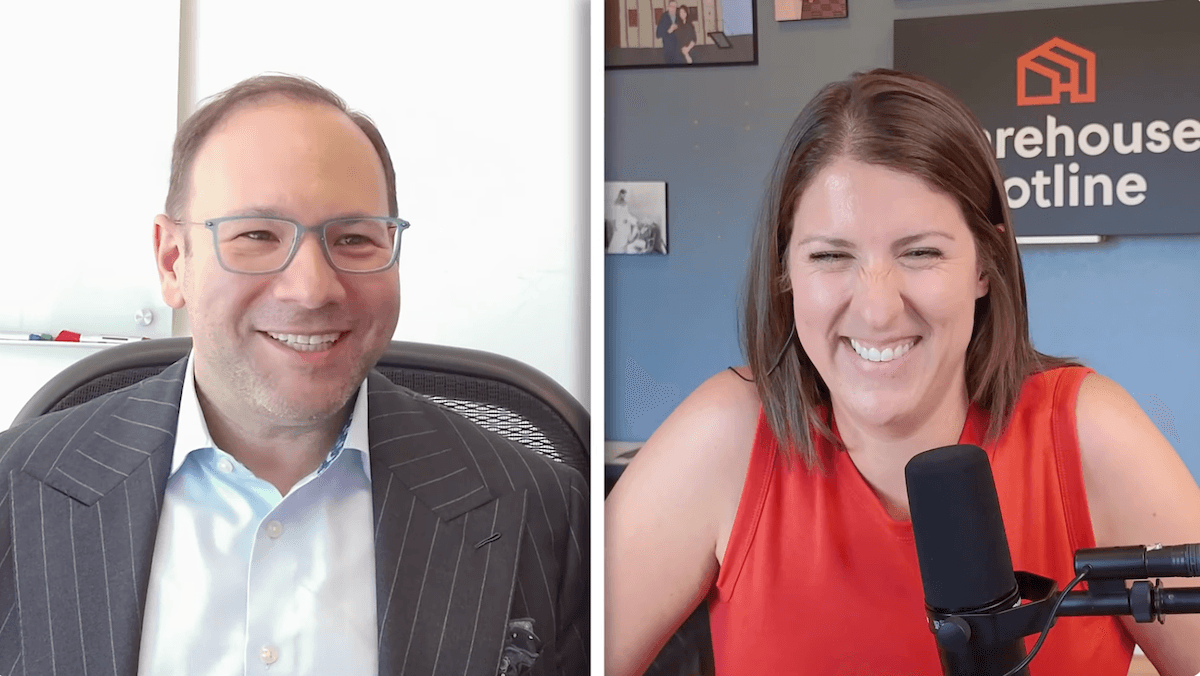
Shlomo Chopp, Managing Partner of Case, joined host Aviva Sonenreich on Commercial Real Estate Secrets for a thirty-one-minute conversation published October 14, 2026. Sonenreich is a third-generation Denver commercial real estate broker and the Managing Broker of Warehouse Hotline, an industrial-focused brokerage, and her weekly show features operators, investors, and advisors from across the industry.
The episode opens on a question many owners are now facing: what happens when a commercial real estate loan comes due and cannot be refinanced? The conversation covers the state of the CMBS market, when a borrower should ask for help, the warning signs of a loan in trouble, the pressure on Denver office values, and the property types Chopp would and would not buy today.
What follows draws on that episode, which you can watch in full on YouTube or find on the Commercial Real Estate Secrets website.
What Is Happening in the CMBS Market Today?
The problem is moving up the capital stack. Borrowers who kept paying through a difficult stretch have run out of money or the will to keep investing, and many of their loans were written in a lower-rate environment. Once the borrower stops supporting the loan, the lender is forced into the same exercise the borrower already went through. In Chopp’s words, the lender “has to reassess what the borrower was forced to reassess, which is whether the basis that they have it at is actually worth it.”
Some borrowers prepared for that moment and can work with the lender toward a resolution. Others are, as Chopp put it, “on the back feet.”
Should Owners Have Seen This Coming?
Yes, Chopp said, though he does not fault anyone for it. Easy capital is hard to refuse. “In every market when there’s a lot of cash out there, it’s a drug,” he said, and once expectations rise they are difficult to bring back down: “once you fly first class, it’s very hard to go back to economy.”
He also pointed to how valuations compound. A lender can be comfortable at a given loan-to-value ratio, but the appraisal behind that ratio relies on comparable sales, and each of those buyers made the same optimistic assumptions. The result is a market that validates itself on the way up.
Where Chopp does assign responsibility is in the present. The owners who concern him are the ones who see a problem and do not get ahead of it, or who assume their skills in one part of the business will carry them through a negotiation with a lender.
When Should a Borrower Call for Help?
Chopp separated the answer into three moments. The wrong time is after the problem has metastasized and a borrower expects an advisor to fix everything. “I’m not a magician,” he said. The right time to call is “the moment you’re realizing it’s going downhill,” when an early conversation can still shape the options.
The point at which Case formally engages is when it is time to build a case for the lender. That means a narrative supported by a realistic pro forma for the property, not a request for a discount because conditions are difficult. The case has to show the lender three things: the borrower is not the problem, the borrower is the solution, and that solution is better than any alternative available to the lender.
What Are the Warning Signs of a Loan in Trouble?
The clearest warning sign is declining cash flow with no obvious way to fix it other than a borrower’s own ability to talk through problems. Real estate rewards gumption and problem solving, Chopp said, but a workout is a different kind of negotiation. Most real estate deals end with a handshake and a closing dinner. “When you do a workout, one side or the other or both don’t want to eat.”
That changes the objective. In a workout, the borrower is trying to convince the other side to accept its least bad option. Leverage matters, but it cannot feel like leverage, because a counterparty who feels cornered may act against its own interest.
Case has written separately on planning a loan workout early and on leverage in loan workouts.
What Does Denver Office Distress Mean for Owners?
Sonenreich raised the sales of downtown Denver office buildings at steep discounts to their prices of a decade ago. Chopp’s view was that the buildings did not lose their value so much as reveal it. “I don’t think it lost its value. I think it articulated the value.”
He described a problem of demand and of competition with better-capitalized owners. A pension fund that needs a modest return can offer larger tenant improvement packages at lower rents than a private owner can match, and the private owner’s lender inherits that disadvantage. No single borrower can change the market. What a borrower can change is the lender’s view of who should own the solution. The question, Chopp said, is whether the borrower can make the lender believe it offers a better option than anything else available.
His broader caution was that “real estate is not a commodity. Real estate is not a series of inputs in an Excel sheet.” Buy boxes, repeatable playbooks, and one early success have led many owners to stop paying attention to the details of each asset.
Where Are the Opportunities Coming Out of This Cycle?
Chopp cited the Rodney Atkins song “If You’re Going Through Hell,” and its line about getting out before the devil knows you’re there. His practical point was that each asset should be judged on its own constraints. Unless a borrower has triggered recourse on a non-recourse loan, properties held in bankruptcy-remote single-purpose entities stand alone, and a loss on one does not need to sink the rest of a portfolio.
He sees two sources of opportunity. The first is acquisition: as institutional owners sell to take losses and redeploy, private buyers backed by family offices and more aggressive capital can buy at a discount. The second is restructuring, which Chopp described as an off-market deal hiding in plain sight. “Those restructuring opportunities are off-market deals for you to close with your lender without any competition.” Getting there requires deep analysis and an understanding of the lender, not a phone call announcing that the lender is stuck with the property.
“Every single asset in this United States of America could be had in one way or another right now,” he said, whether through the property, the loan, a limited partnership position, or a discounted public vehicle. The discipline is to play offense and defense at once, and sometimes to let go of one property and redeploy the capital that would have carried it.
Case’s view on the borrower side of that negotiation is in winning the workout through lender relations.
Which Property Types Would Shlomo Chopp Buy Today?
Asked to name one property type to buy, Chopp named one he would avoid, and it happened to be the host’s specialty: industrial. His reasoning was that the sector has been frothy and overbuilt around e-commerce, which he does not regard as a proven profitable business, while consumer sentiment is softening. He acknowledged the differences between small-bay and distribution product but sees less opportunity in industrial as a whole than elsewhere.
He would also be cautious on hotels, citing shifts in demand and the labor intensity of what is fundamentally an operating business.
Where he sees opportunity:
- Office, if bought at the right price with the capital to fund tenant improvements.
- Multifamily, where many problems trace to interest rates and inexperienced operators, particularly through recapitalizations.
- Retail, selectively, recognizing that large department-store tenants and the department-store format itself have changed.
Across all of them, Chopp said, heavy structuring can avoid a bidding war. Giving the previous owner or the lender a path to recover money, if the deal is structured correctly, can secure an asset without driving up the price. Case pursues those transactions alongside operating partners, focusing on structuring and the business plan.
What Is Shlomo Chopp’s Commercial Real Estate Secret?
Honesty, and the long horizon over which it pays. Chopp described bidding on a large New York City note sale and reaching best and final, then realizing the diligence would not support the fast closing the seller expected. He called the seller and withdrew rather than let the seller head toward a closing he could not deliver.
The cost of that kind of candor is a lost deal. The return can arrive years later, when someone across the table in a difficult negotiation remembers who told them the truth. “If you do the right thing, then you don’t have to sleep with one eye open,” Chopp said, “and you can maintain relationships for your entire life.”
Facing a maturing loan you cannot refinance? Request a consultation with Case’s senior restructuring team in New York.
Frequently Asked Questions
What happens when a commercial real estate loan cannot be refinanced?
The borrower and lender both have to reassess whether the property supports the current loan basis. Outcomes range from an extension or modification to a recapitalization, a discounted payoff, a note sale, or foreclosure. The borrower’s options are strongest when it approaches the lender early with a supported plan.
When should a borrower contact a workout advisor?
As soon as it becomes clear that cash flow is declining and there is no obvious fix. A borrower who waits until negotiations have run for a year and the loan is near a default or maturity has fewer options.
What should a borrower present to a lender in a workout?
A narrative backed by a realistic pro forma that shows why the property is underperforming, what it needs, and why the borrower’s plan produces a better outcome for the lender than taking the property back or selling the loan.
Is a loan restructuring an investment opportunity?
It can be. A restructuring negotiated directly with the existing lender is effectively an off-market transaction with no competing bidders, provided the borrower can justify the plan with analysis the lender accepts.
Listen to the Episode
“Can’t Refinance Your Commercial Loan? Here’s What to Do.” is an episode of Commercial Real Estate Secrets hosted by Aviva Sonenreich, published October 14, 2026, and runs 30:56. Full credit to Aviva Sonenreich and the Commercial Real Estate Secrets team for the conversation.
Watch on YouTube: https://www.youtube.com/watch?v=vVkhxX4au9k
Visit the show: https://www.cresecrets.com